

FELICIA ITEJE
Nigeria must move beyond expanding access to bank accounts and focus on making digital financial services affordable, accessible and beneficial to millions of citizens still excluded from the digital payment ecosystem.
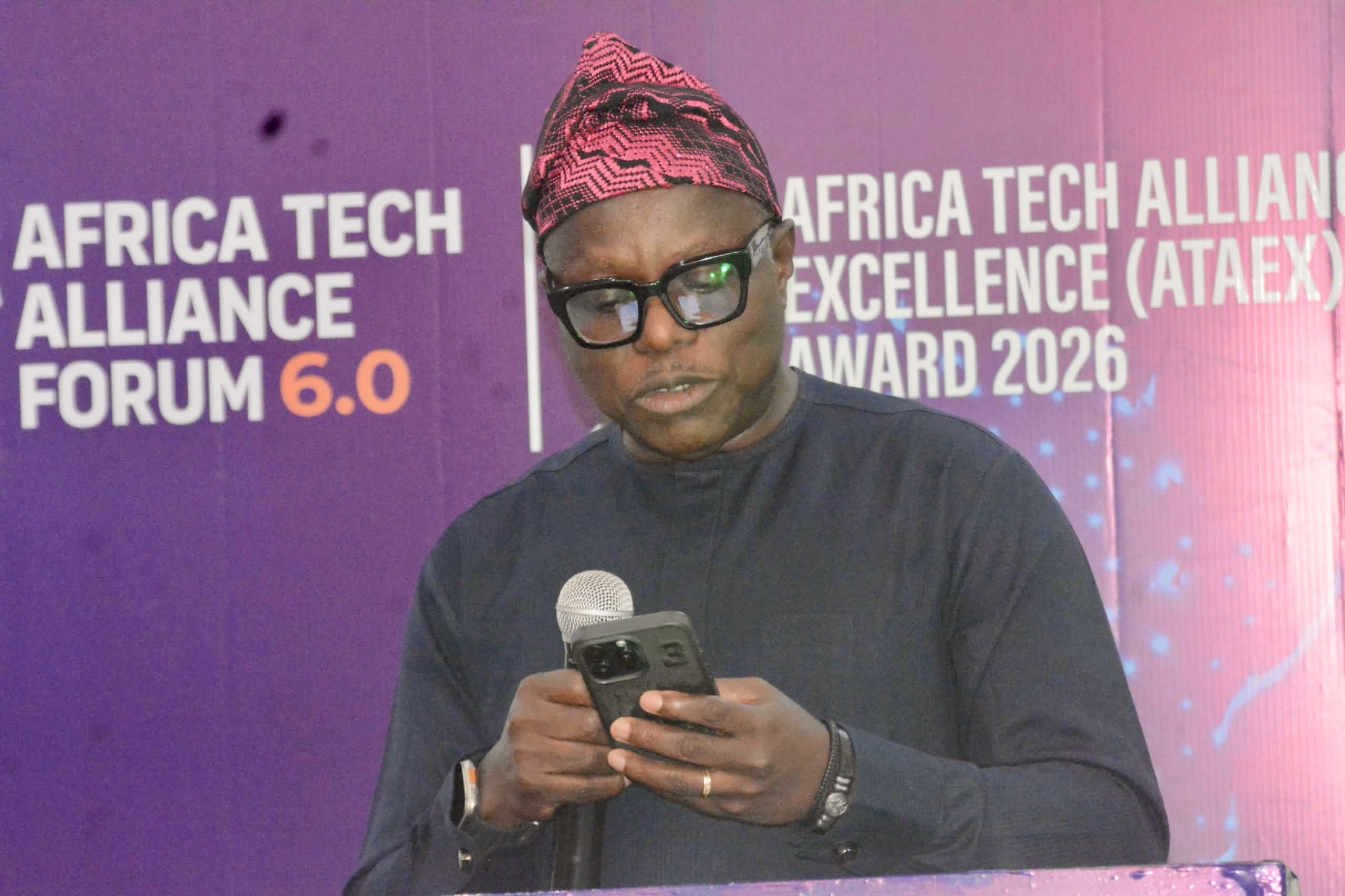
The Managing Director and Chief Executive Officer of AfriGoPay Financial Services Limited, Dr. Ebehijie Momoh, stated this while delivering the keynote address at the AfriTech 6.0 Conference.
Speaking on the theme, "Beyond the Banked: What Must Change for the Next 100 Million Nigerians to Transact Digitally," Momoh, represented by AfriGO Executive Director and Chief Commercial Officer, Ugo Obasi, said financial inclusion must address the economic realities of low-income earners, informal sector operators and small-scale traders.
Using the example of Mama Nkechi, a market woman in Nyanya, Abuja, who earns about N15,000 on a good day, she explained that transaction charges, unreliable networks and failed transfers could discourage ordinary Nigerians from adopting digital payments.
"Not because she is backward. Because she is rational," she said, arguing that cash remained preferable to many traders because it was more practical and predictable.
Citing EFInA's 2026 survey, Momoh said formal financial inclusion had risen to 73 per cent, representing approximately 87 million adults, while digital financial service usage had reached 64 per cent.
However, she noted that six in 10 Nigerian adults experienced severe liquidity distress, while one in three still did not use any digital financial service. She also cited World Bank estimates that 63 per cent of Nigerians, representing about 140 million people, lived in poverty in 2025.
"We have largely solved access. The next frontier is usage, and usage is driven by income, cost and value," she declared.
Affordability and reliability critical
Momoh identified three major changes needed to accelerate digital financial inclusion.
First, she advocated payment solutions that do not depend exclusively on smartphones, noting that the cost of devices, internet data, airtime and electricity remained prohibitive for many low-income Nigerians.
Citing GSMA estimates, she said an entry-level smartphone could consume nearly half the monthly income of a low-income Nigerian. She therefore called for infrastructure accommodating smartphones, physical cards and contactless payment instruments.
Second, she urged providers to make digital transactions cheaper and more reliable than cash. According to her, a N100 transaction charge could represent the cost of a meal for someone earning N3,000 daily, while delayed reversals of failed transfers could disrupt small businesses.
"Trust in digital money is built at the speed of the worst experience, not the best," she said, advocating transparent pricing and affordable charges for low-value transactions.
Third, she called for a shift from account-opening initiatives to programmes that generate income and stimulate economic activities through wages, agricultural payments and government social interventions.
"Every inclusion programme should face one test: does it bring new money into people's accounts, or just new accounts?" she asked.
AfriGO's domestic payment solution
Explaining AfriGO's contribution, Momoh described the national domestic card scheme, established by the Central Bank of Nigeria (CBN) and Nigeria Inter-Bank Settlement System (NIBSS), as an initiative designed around Nigeria's economic realities.
She said the card, built on EMV standards with contactless and tokenisation capabilities, enables payments at point-of-sale terminals without necessarily requiring smartphones or internet data.
"For a woman who cannot afford a smartphone, a card in her purse is her digital wallet," she said.
Momoh disclosed that AfriGO had approached 10 million issued cards in less than two years of core operations through partnerships with commercial and digital banks.
She also highlighted the integration of the National Identity Management Commission's multipurpose national identity card with AfriGO's payment infrastructure. With more than 100 million Nigerians holding National Identification Numbers, she said the integration could facilitate identity verification, government benefit payments and financial transactions through a single card.
Other initiatives include instant credit for merchants, a partnership with Touch and Pay integrating the Cowry card into transportation payments, and collaboration with UnionPay to enable transactions across more than 184 countries.
She added that AfriGO was piloting its Kashback loyalty programme to reward cardholders for transactions.
Calls for stakeholders' collaboration
Momoh urged government institutions, regulators, banks, fintech companies, telecommunications operators, device manufacturers and investors to collaborate in accelerating digital payment adoption.
She called on government agencies to prioritise digital disbursement of public funds and social benefits, while banks and fintech companies should introduce affordable pricing structures. Telecommunications operators and device manufacturers were also urged to help reduce the cost of smartphones and connectivity.
Describing low-income Nigerians as a significant commercial opportunity, she said: "The bottom of the pyramid is not charity. It is the largest under-served market in Africa."
She maintained that Nigeria's ambition to bring another 100 million people into digital transactions would only succeed when payments became affordable, widely accepted and reliable.
"The next 100 million Nigerians are not waiting for a better app. They are waiting for a better deal. We will not reach them by moving faster. We will reach them by moving together," she said.