

TOLU JOHNSON
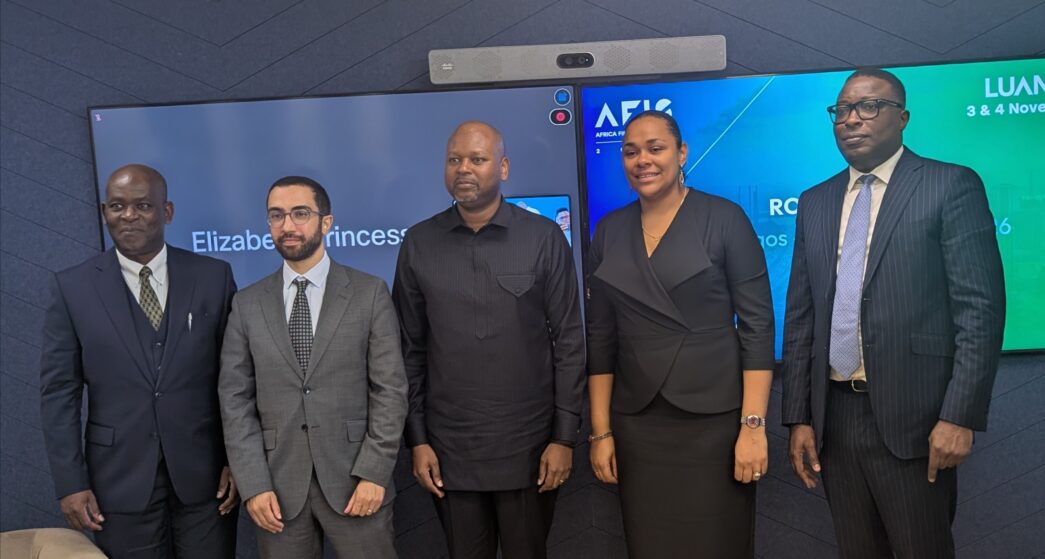
The Africa Financial Summit (AFIS) in conjunction with International Finance Corporation (IFC) has announced readiness to bring financial and business leaders across Africa for the 6th AFIS Annual Summit scheduled to hold on November 3-4, 2026, in Luanda in Luanda, Angola, in November this year.
This was disclosed by IFC in Lagos during a press briefing on Wednesday, September, 2026.
In his opening remarks, Christian Mulamula, Principal Country Head (Nigeria), IFC, encouraged speakers at the event to bring perspectives that connect IFC’s development mandate, the AFIS Pan African platform, and the experience of leading African financial institutions, particularly represented by Access Bank.
“What we are doing today is like the Olympic Tourch. This Olympic torch rally starts with Nigerian banks, institutional investors, fintechs and capital market institutions; and is really shaping how finance moves across the continent. And it can play a defining role in how African capital is mobilised for the African for African growth.
“The central question is how Nigeria can mobilise long-term capital at the scale required and channel it into businesses, infrastructure, and essential services that drive growth and create jobs. Now, this is really a question not only for Nigeria, but also for the continent as a whole."
“The roadshow builds toward the AFIS Annual Summit, scheduled for November 3-4, 2026, in Luanda, The event’s first edition in Southern Africa and in a Portuguese-speaking country will hold
“More than 1,250 senior leaders from Africa’s financial industry, including bankers, insurers, fintech founders, capital market experts, mobile money operators, policymakers and regulators, are expected to attend.
“The summit is built around six strategic pillars aimed at addressing climate transition, digital transformation, financial inclusion and regulatory harmonisation across the continent’s financial sectors,” he added.
On his part, Olivier Buyoya, Division Director, Nigeria and Central Africa, IFC, stressed the need to have the leaders of Pan African financial institutions in the room to provide their perspective.
“Our financial institutions lead by their size. They also lead by innovation. That’s why it’s important to bring that innovation to Africa. It’s important to have Nigeria represented. You can also go the other way around. We see innovation coming from other parts of Africa: Kenya, Morocco, Egypt and South Africa that are piloting from a regulatory standpoint. Also from a commercial market standpoint, ideas and innovations can benefit actors here. So it’s a two-way street, and we really hope, as we had the privilege to have a strong representation from Nigerian financial market players,” he said.
Also speaking at the parley, Hicham Al Marabet, AFIS Director, said the purpose of the event, co-hosted by the World Bank and Jeune Afrique, is to foster financial integration on the continent and strengthen the financial sector to enable it to finance the real economy.
Dafe Oraka, IFC principal investment officer, said AFIS is an annual event for shaping the continent’s financial future and job creation.
Oraka said the event will bring financial leaders together to consider how the sector can acquire skill, reach, and expertise to mobilise private capital for job creation and support Africa’s next phase of development.
Also speaking, Elizabeth Oguegbu, Group Head of Financial Markets & Funding, Access Bank, raised the need for investments in infrastructure, but harped on attendant challenges with the transaction.
In her words: “Most times, it’s not about the nature of the transaction. It’s about what we can do and which partners can you work with. I already feel like I am part of the IFC family because I am confident every day saying that we need to solve this problem. Capital could be two ways: either the bank needs the capital to expand and support their clients, or the bank needs the DFI support to then fund the infrastructural project, and we’ve had a mix of both. It has been an interesting one. So, from a commercial banking standpoint, I think there’s a lot more we can do.”